McDonald's Collaborative Proj.
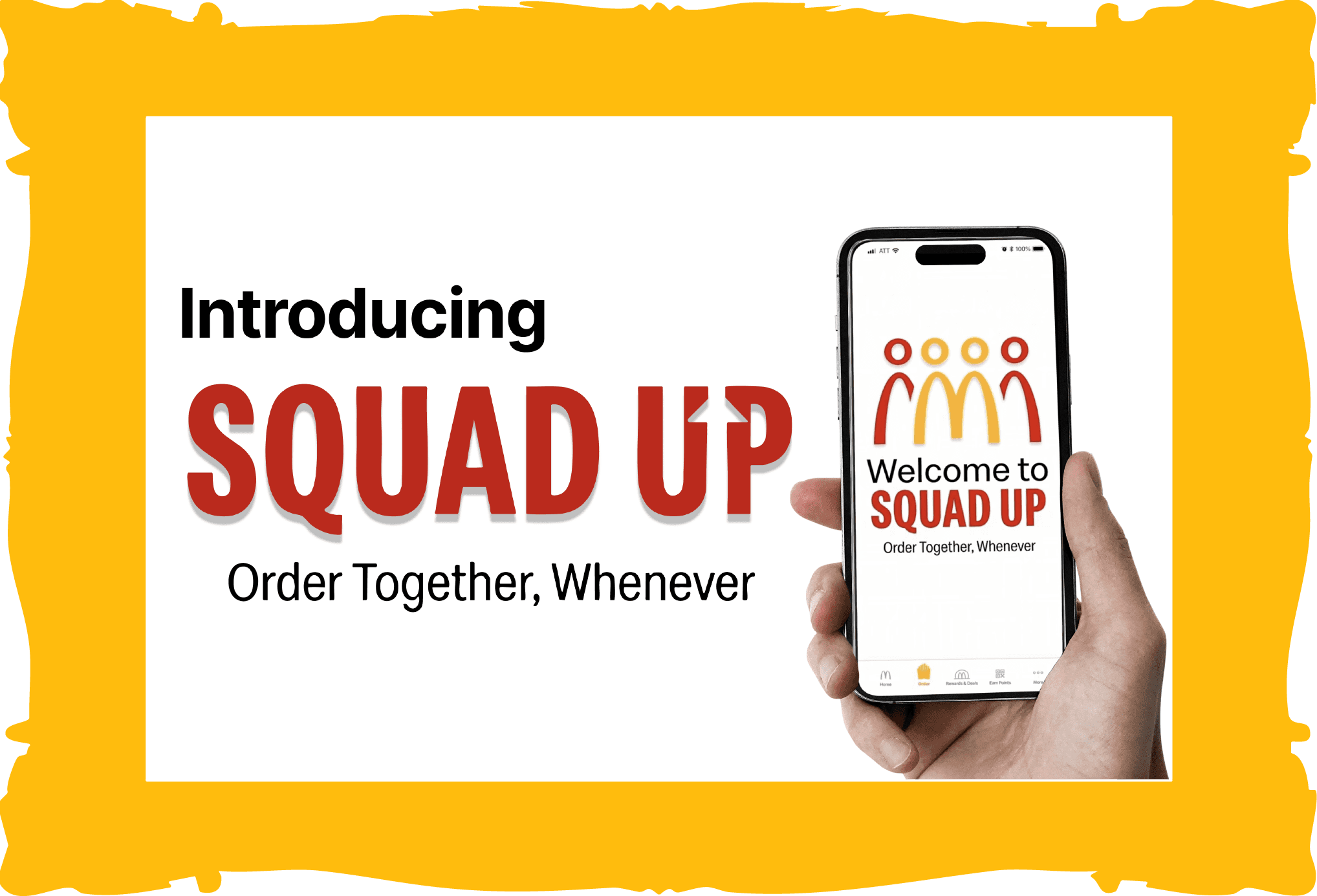
This project was completed in partnership with McDonald’s and focused on reimagining family engagement and customer experience across digital and physical touchpoints. The work emphasizes insight-driven design, systems thinking, and translating behavioral research into scalable service concepts. The outcome was a hi-fidelity prototype of a group ordering feature embedded within the McDonald's Mobile Ordering App.
UX + Interaction Design
Project Type: Interaction Design / Service Design Concept (QSR Digital Experience)
Role: UX Researcher + Interaction Designer
Tools: Figma, A/B prototype testing, Adobe Suite
Timeline: 10-week (Winter Quarter)
Project Overview
How might we facilitate access and ease of ordering for groups of teens to make McDonalds a more attractive consideration in their social gatherings?
QSR visits happen within larger journeys
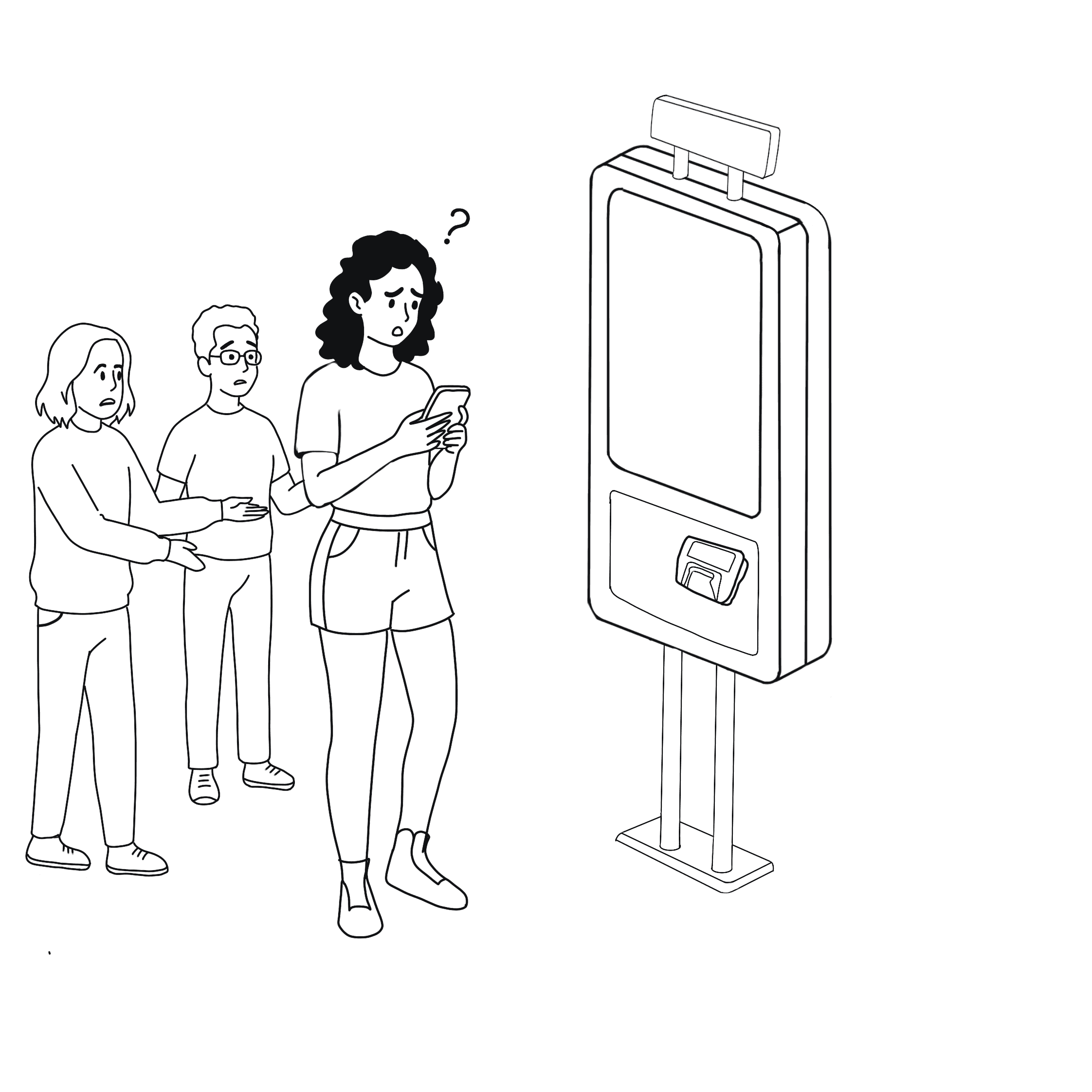
Group ordering carries a high coordination cost
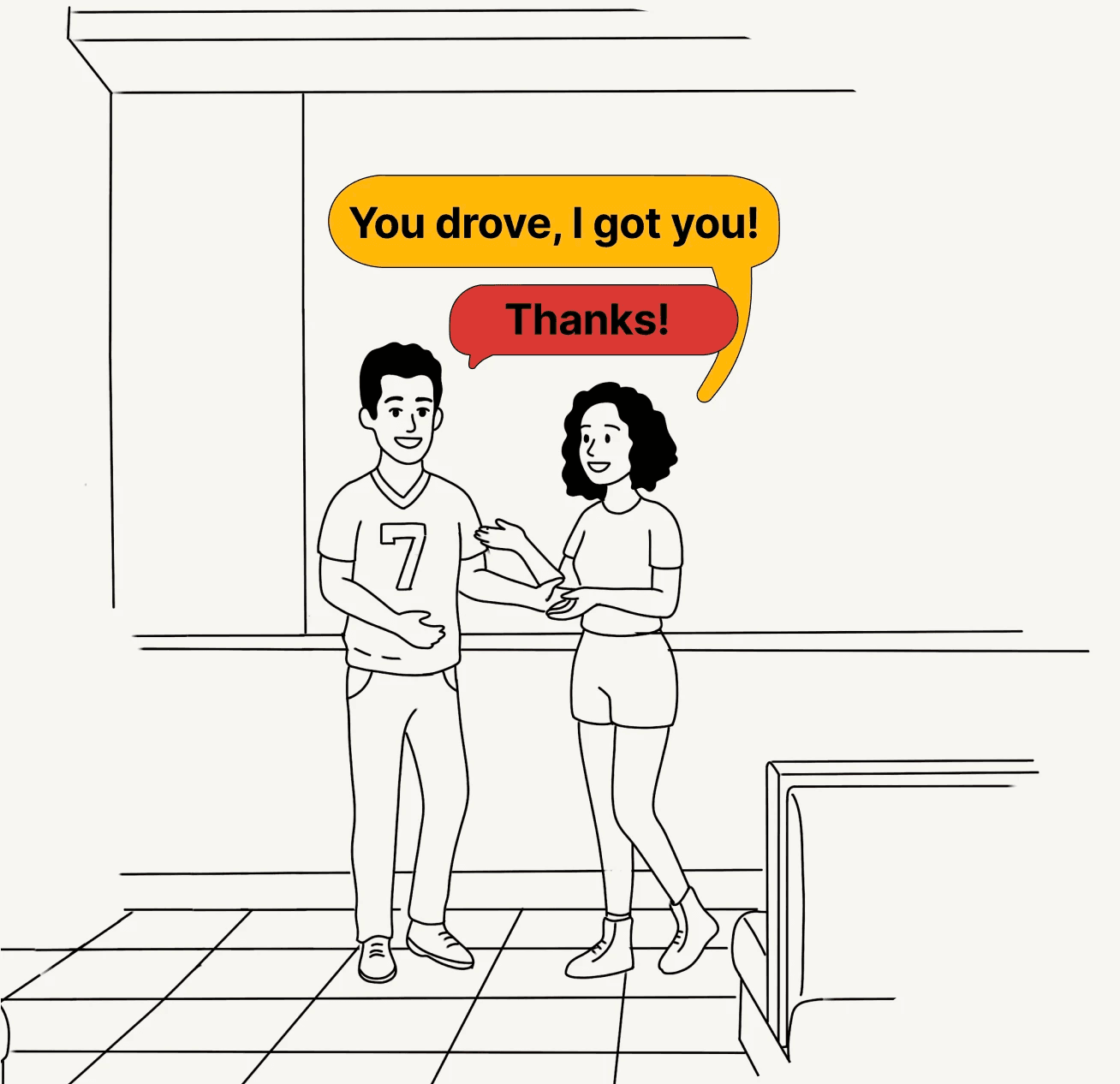
Payments rely on informal systems
Ordering for a group often requires one person to collect everyone’s choices, customize items, and confirm details at the kiosk or counter. This creates friction and slows the ordering process, especially when multiple people want different modifications.
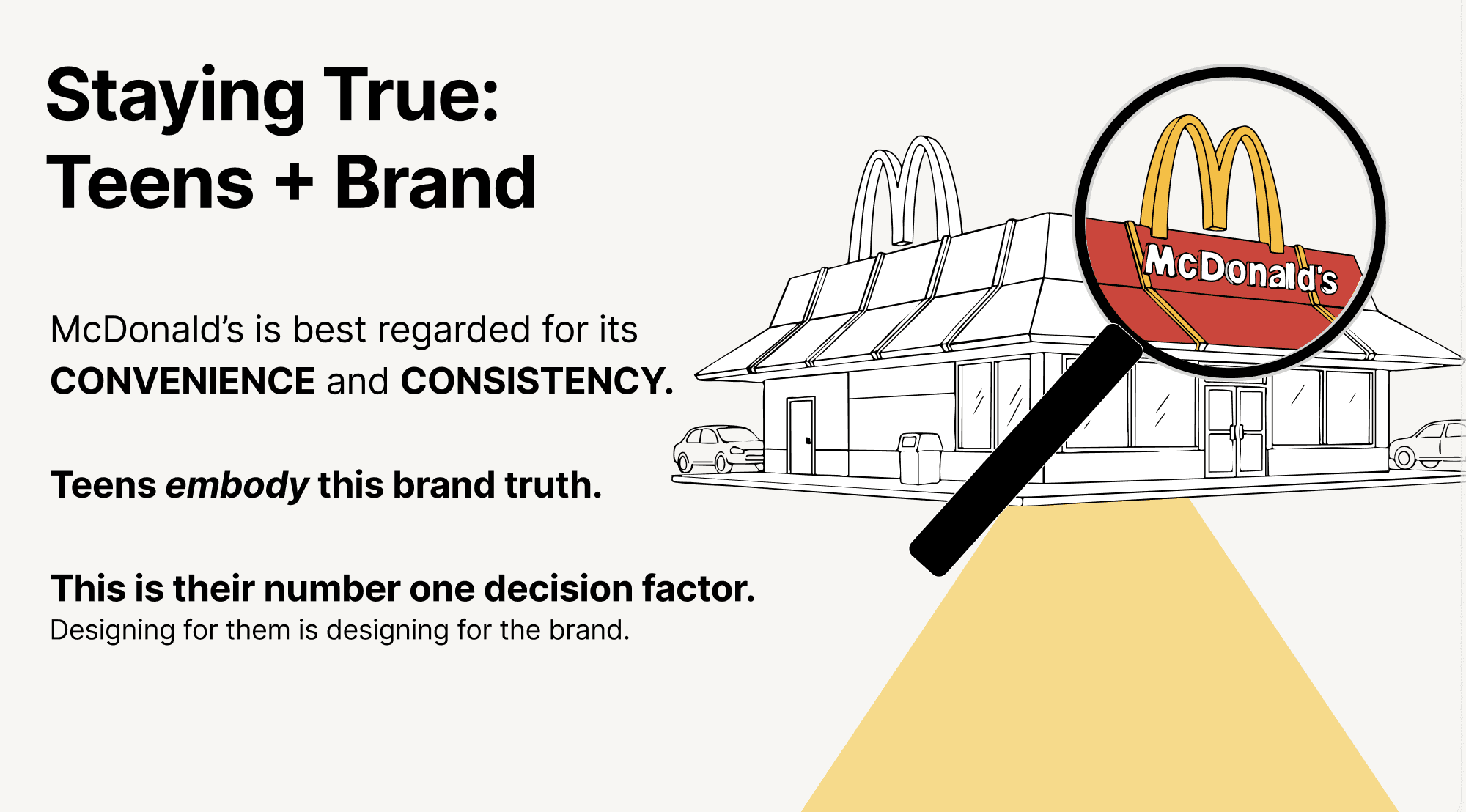
Teens rarely visit quick-service restaurants as standalone destinations. Instead, stops at places like McDonald’s are woven into larger social routines—between activities, after events, or while traveling with friends—making speed and coordination especially important.
When one person places the order, teens often settle up afterward using cash, IOUs, or quick peer-to-peer transfers. These informal payment methods create small moments of uncertainty around who owes what and when.

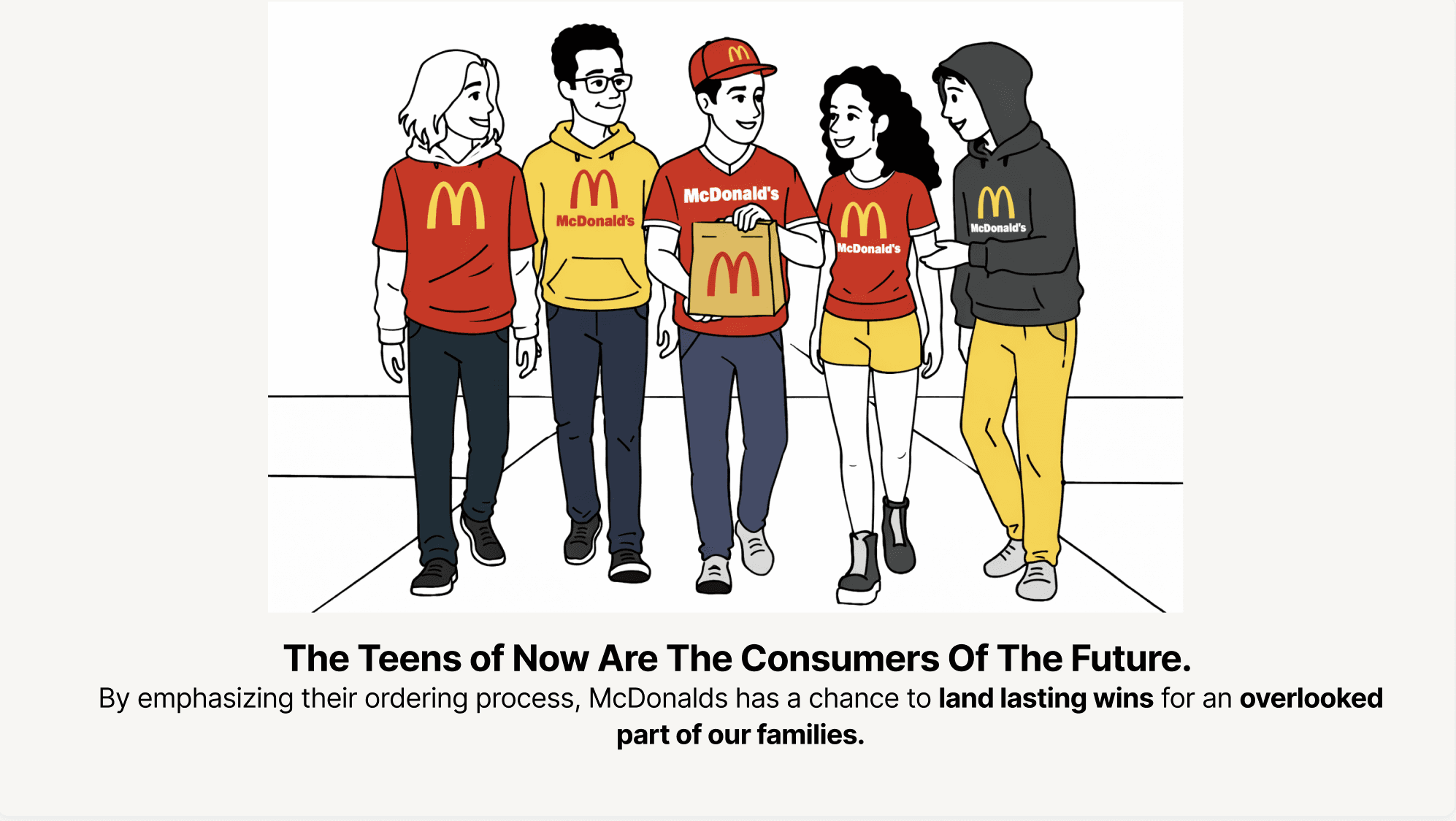
Teens often stop at McDonald’s between activities, revealing a family segment that extends beyond parents and kids to include friend groups.
Conducted as part of the Interaction Design studio within Northwestern University’s Engineering Design Innovation (EDI) curriculum, Squad Up explores how quick-service restaurants can reengage the family segment by activating teenage social groups. Teens frequently visit McDonald’s in the transitional moments between activities, yet existing ordering systems are designed primarily for individuals or traditional families. The project investigates how collaborative mobile ordering could allow friend groups to build shared orders, manage individual payments, and coordinate pickup through a single seamless experience.
The process began with secondary research on quick-service restaurant behaviors and the evolving role of teenage social groups within the family segment. Primary research followed through four site observations, eight qualitative interviews, and twenty-two survey responses to understand how teens coordinate group food orders, payments, and pickup during shared outings. These findings were synthesized into key insights that informed ideation around collaborative ordering and reduced coordination friction. Early concepts were explored through iterative wireframing and prototyping, with A/B testing across different user flows and interface screens to evaluate usability and group coordination dynamics. Insights from testing informed successive refinements, ultimately shaping a streamlined “happy path” that supports shared ordering, individual payments, and coordinated group pickup.
Methods
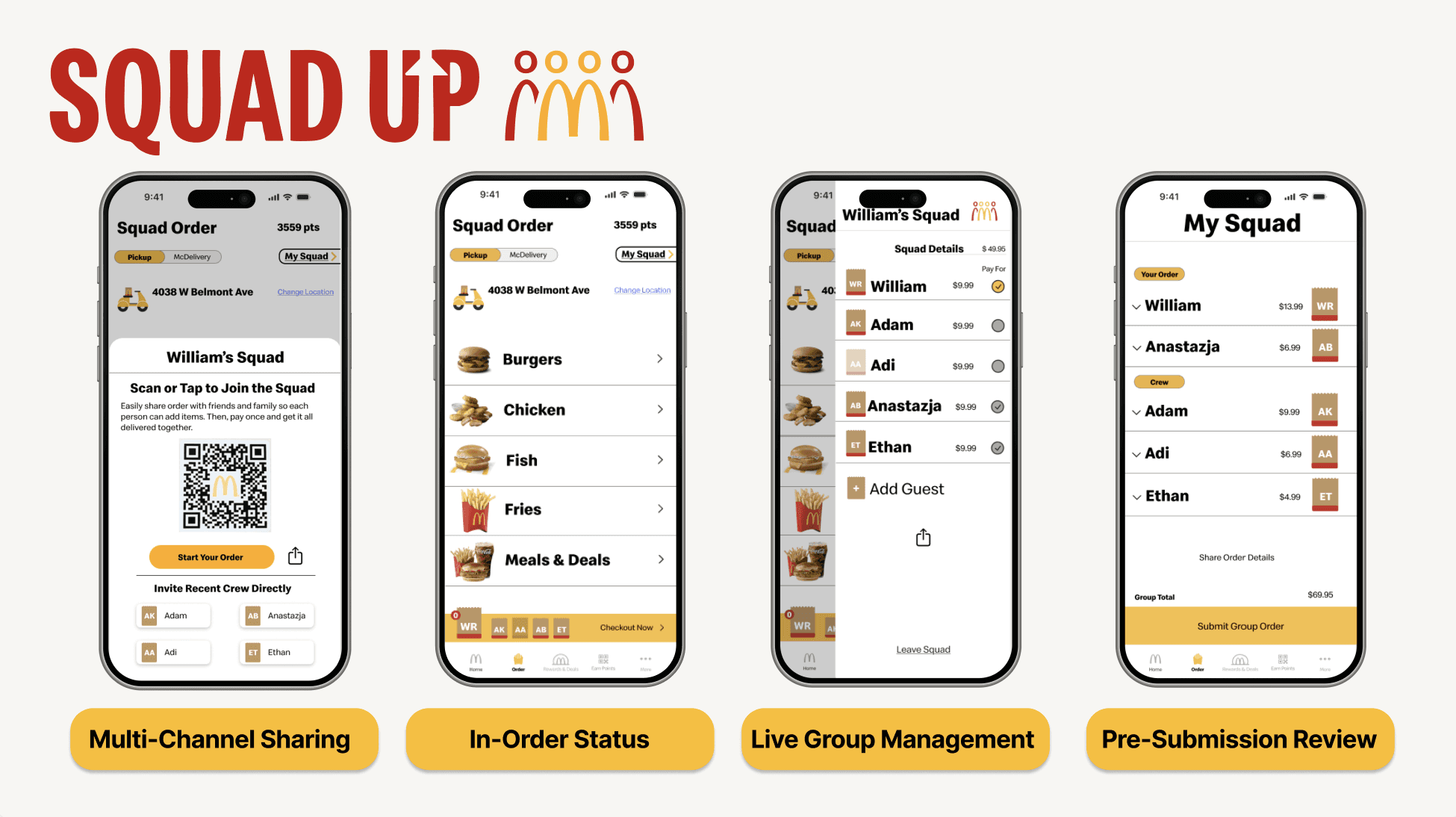
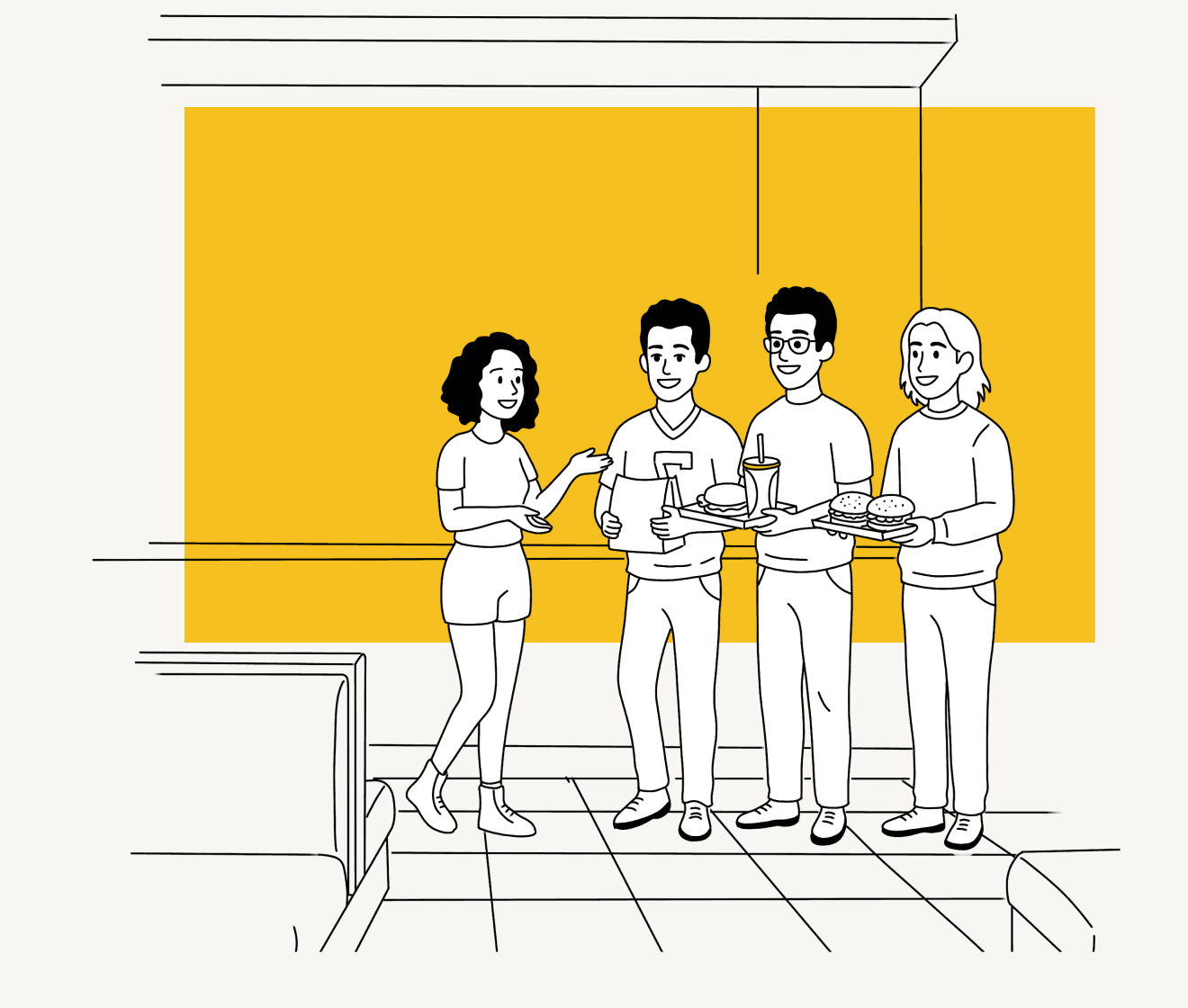
Squad Up is a collaborative group-ordering feature designed to simplify how teenage friend groups coordinate food orders within the McDonald’s mobile app. Users can invite friends via QR code or link, add items to a shared cart, track individual selections in real time, and review the full order together before checkout—reducing the coordination friction that often arises when one person orders for the group.
Design Solution
I led wireframing and helped shape the interaction design for the Squad Up experience, translating research insights into user flows, interface structures, and key features that supported collaborative ordering. I conducted UX research through site observations, interviews, and surveys, and worked with the team to synthesize findings into insights that informed the design direction. I also created visual digital assets and interface designs used to communicate the concept and user journey. The project culminated in presenting our solution to a board of McDonald’s executives, where we shared the research, design rationale, and final experience. Through this work, the project highlighted how digital ordering systems can better support the social dynamics of teen friend groups, demonstrated the value of reducing coordination friction in group experiences, and reinforced the importance of cross-disciplinary collaboration in shaping service and interaction design solutions.
Roles & Takeaways

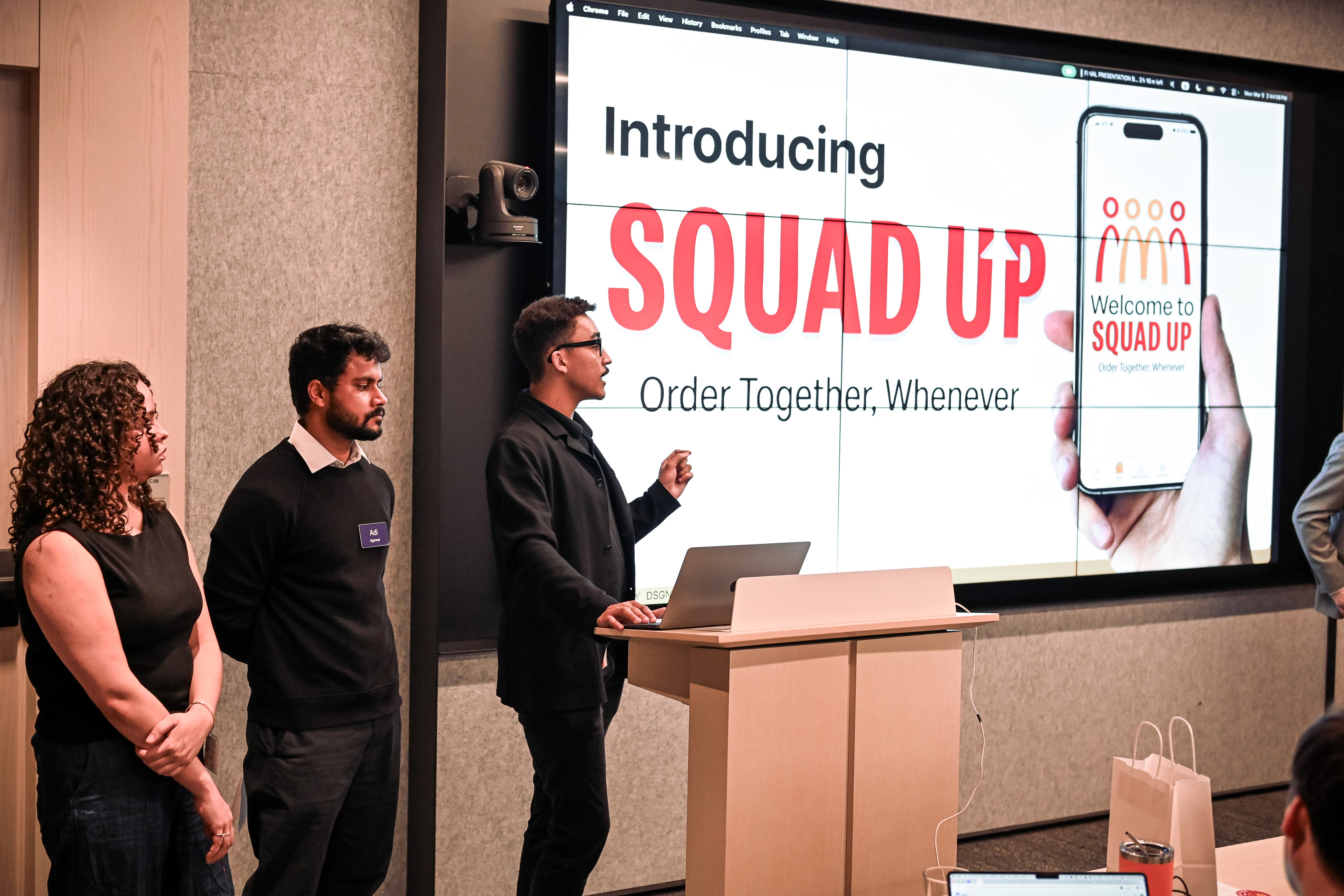
The final concept was communicated through high-fidelity mobile interface designs illustrating the Squad Up group-ordering experience, alongside host and guest user flows that demonstrate how users invite friends, build a shared cart, track individual contributions, and review the order together before submission.
Outcomes