J.P. Morgan Collaborative Proj.
This project was completed in collaboration with JPMorgan Chase and focused on improving how customers navigate complex financial services through digital experiences. Through user research, journey mapping, and concept development, our team explored opportunities to reduce friction, increase clarity, and build trust across key moments in the customer journey. The work highlights systems thinking, accessibility considerations, and insight-driven design within a large-scale enterprise environment.
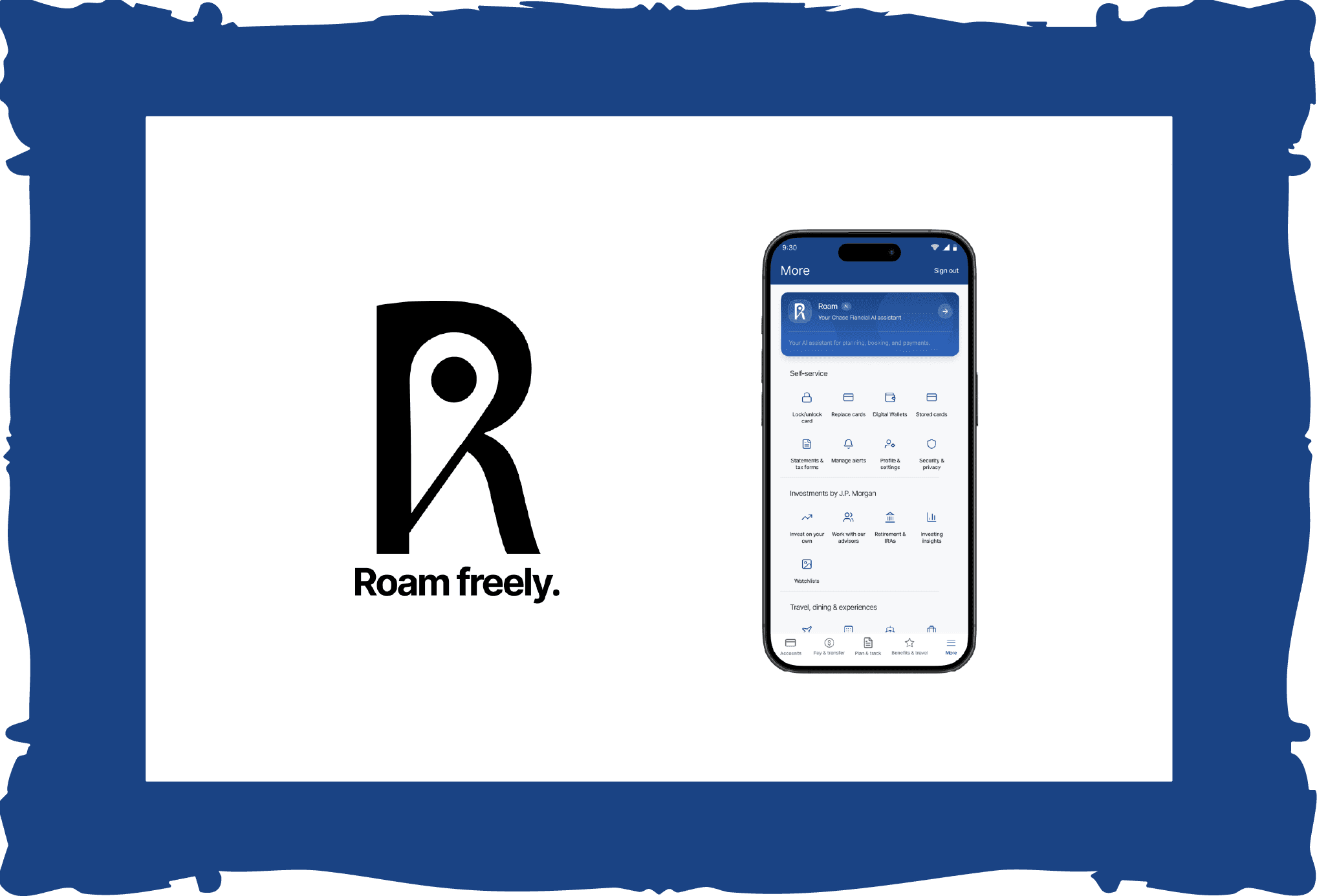
UX + Service Design
I contributed to UX research and concept development for the project, helping synthesize insights from interviews, observations, and surveys into design principles that guided the team’s direction. I supported the development of scenarios and visual assets used to communicate how an embedded financial agent could assist users in everyday decision-making. The project culminated in pitching our final concepts to the JP Morgan Payments team, where we presented our research insights, design rationale, and proposed experience. Through this work, the project explored how adaptive, accessible digital services can support users during complex moments such as planning travel, highlighting the value of research-driven design and cross-disciplinary collaboration in shaping meaningful financial experiences.
Roles & Takeaways
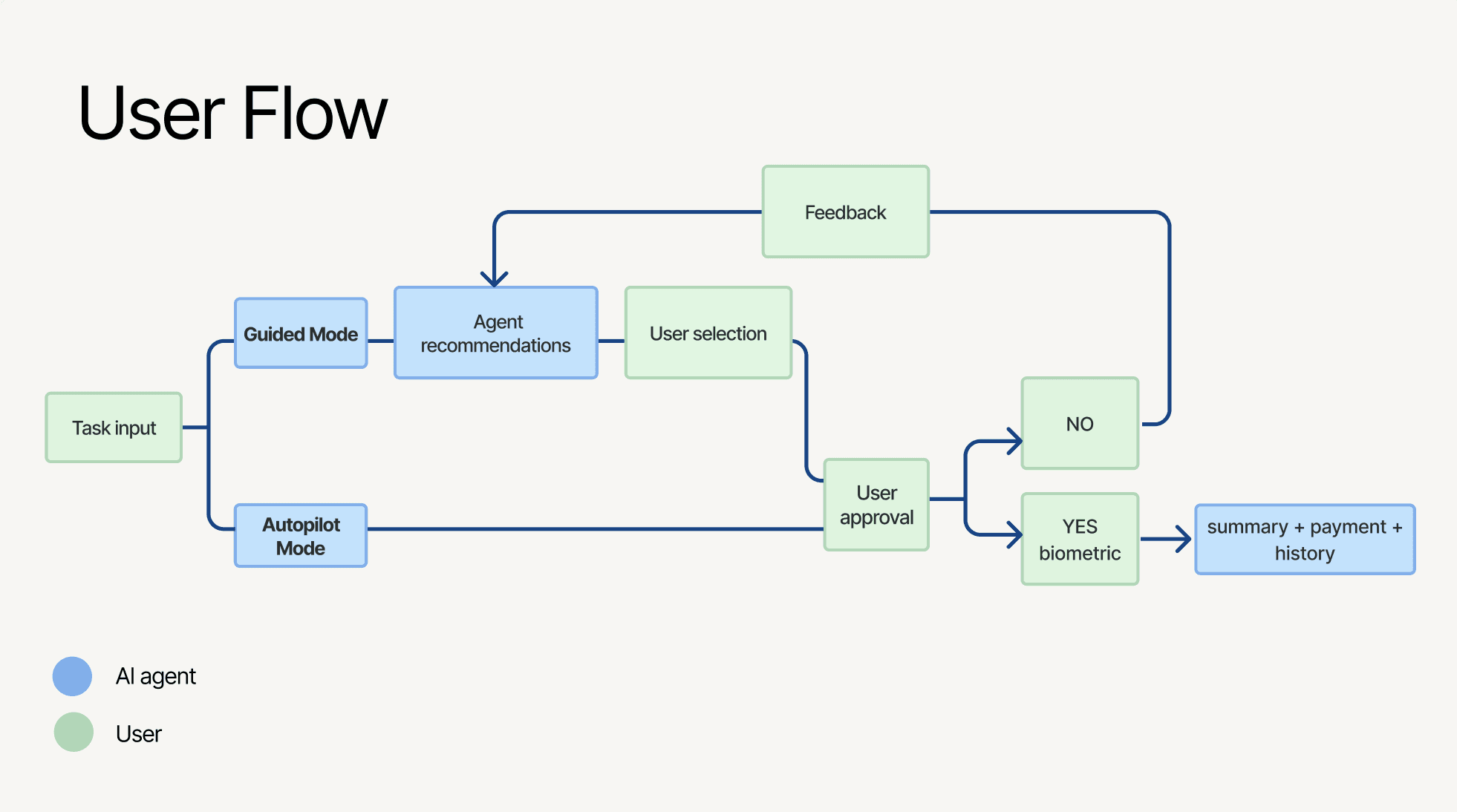
The final concept was communicated through a user journey centered on planning a trip, supported by wireframes illustrating how an embedded financial agent could assist with everyday decisions. Scenario-based applications further demonstrated how the system adapts to user needs through accessible, context-aware interactions.
Outcomes
The process centered on a futures-driven approach, examining emerging trends in financial behaviors and evolving attitudes toward agentic technologies. This was complemented by primary interviews with disabled individuals to understand how intelligent, assistive services might shape more inclusive and empowering experiences. Insights informed the development of a forward-looking concept, which was explored through two potential future applications. These were articulated through early journey wireframes to illustrate how agentic support could integrate into everyday financial interactions.
Methods
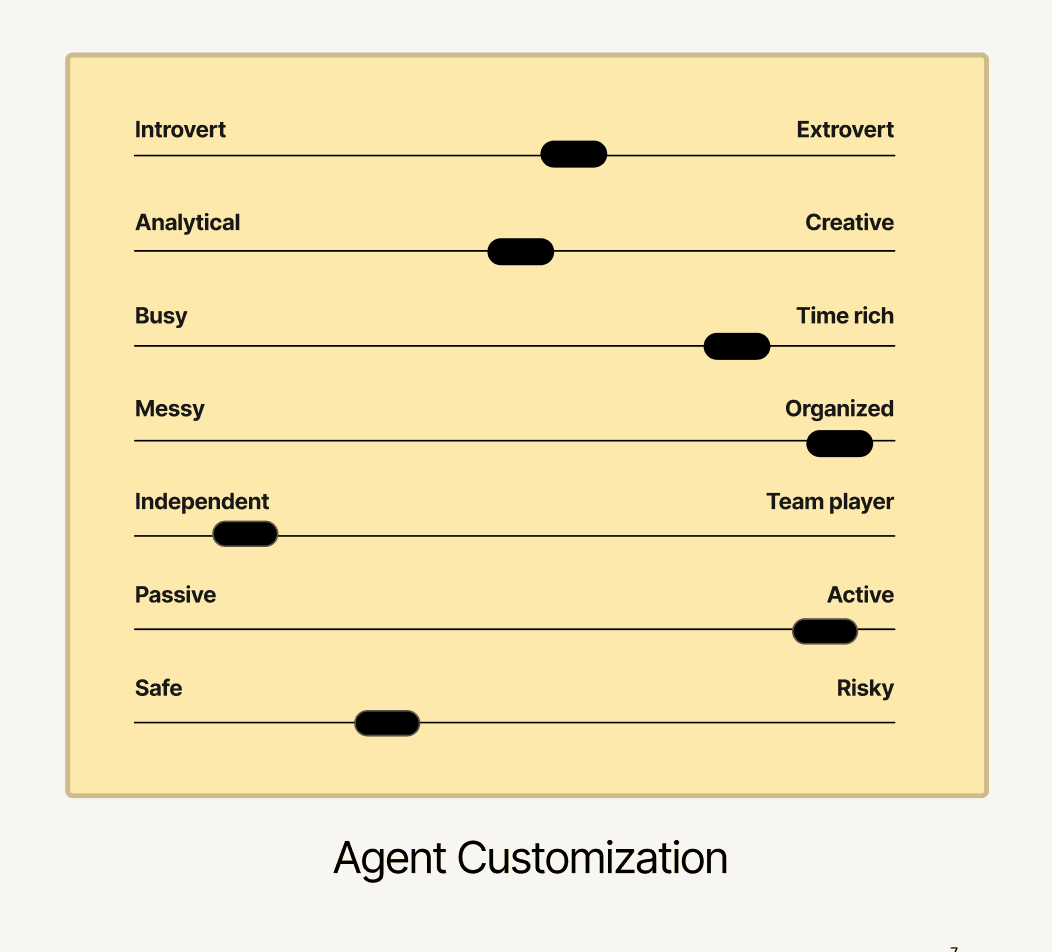
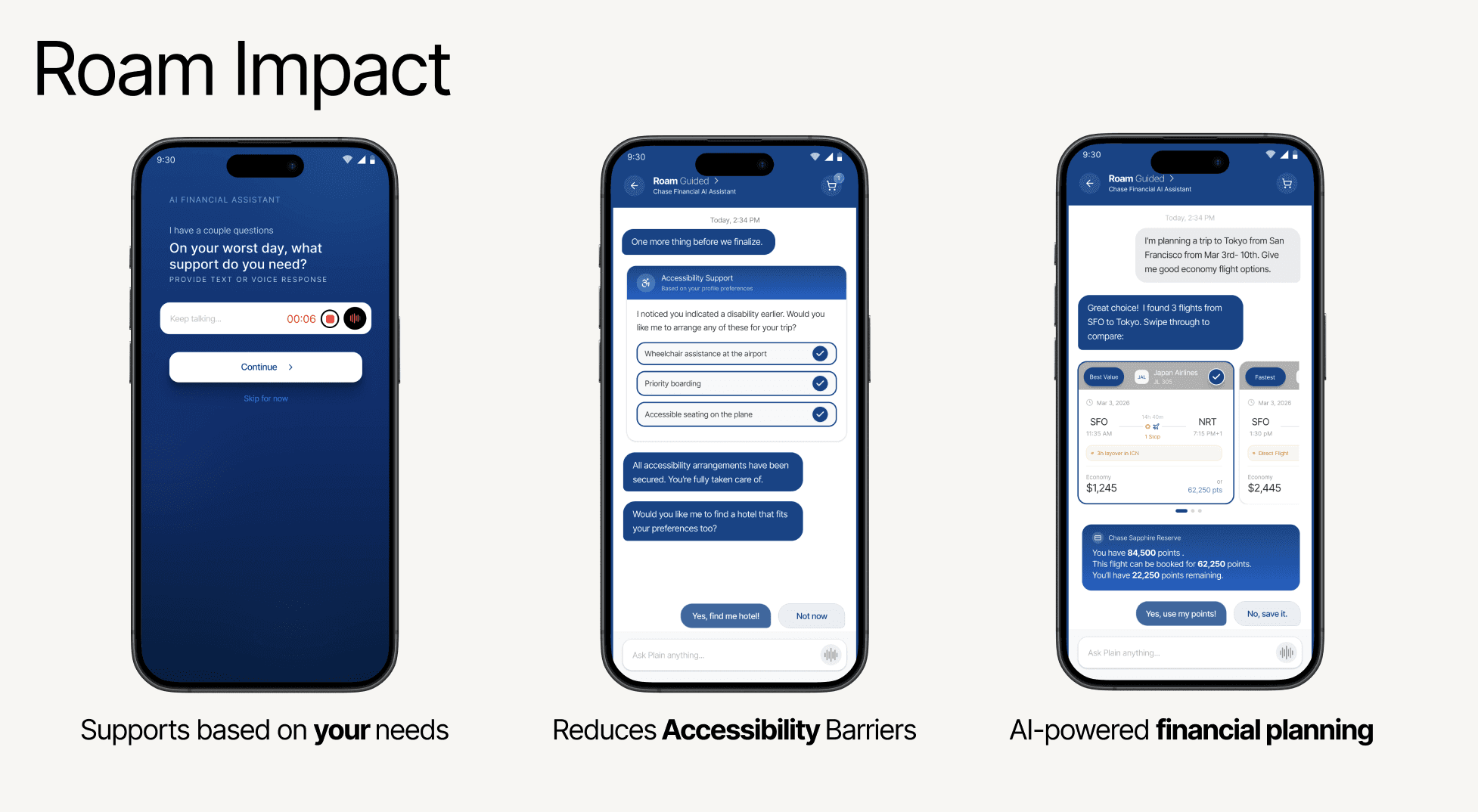
Roam is an intelligent agent housed within the Chase banking app that provides real-time, contextual guidance across everyday financial decisions. The concept explores how embedded support—rather than separate tools—can help users navigate complexity, anticipate needs, and build confidence within their existing banking experience.
Design Solution

How might we design a financial services agent that increases user autonomy while supporting diverse accessibility needs?



Tools that preserve agency are more likely to be trusted and adopted, as autonomy is closely tied to confidence and dignity.
Support requirements change based on context, energy, and environment, highlighting the need for flexible rather than fixed solutions.
Concerns around control and transparency mean intelligent systems must feel predictable and user-led to be embraced.
Accessibility needs look different day-to-day
Feeling independent is important to people with accessibility needs
Trust is a barrier to use of agentic services to people
Developed through a collaborative design initiative, this project explores how evolving financial behaviors and expectations are reshaping everyday banking experiences. As decision-making becomes more dynamic and personalized, traditional static interfaces often fail to provide timely, contextual support. The work investigates how embedded, adaptive assistance could make financial systems feel more responsive—helping users move through moments of complexity with greater clarity, confidence, and control.
Many people struggle to navigate financial systems that weren’t designed for how they actually live, their needs, and manage uncertainty.
Project Type: Ux Research, Interaction + Service Design
Role: UX Researcher + Service Designer
Tools: Figma, Adobe Suite
Timeline: 10-week (Winter Quarter)
Project Overview